Thread Count Is Mostly Marketing — Here's What Actually Predicts a Good Night's Sleep
Quick Answer: Above roughly 400, thread count stops correlating with comfort and often signals manipulated counting (multi-ply threads counted as multiples) — fiber type (long-staple cotton, linen, or quality microfiber), weave, and yarn quality matter far more than the number on the package.
The bedding aisle trained everyone to chase a number that, past a certain point, tells you almost nothing useful.

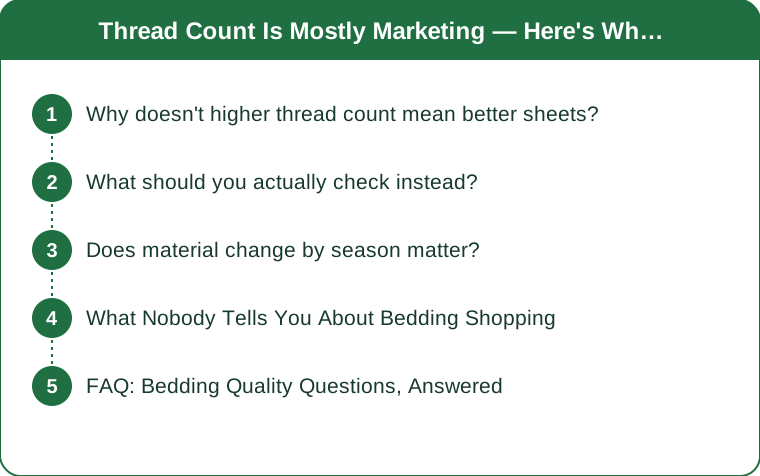
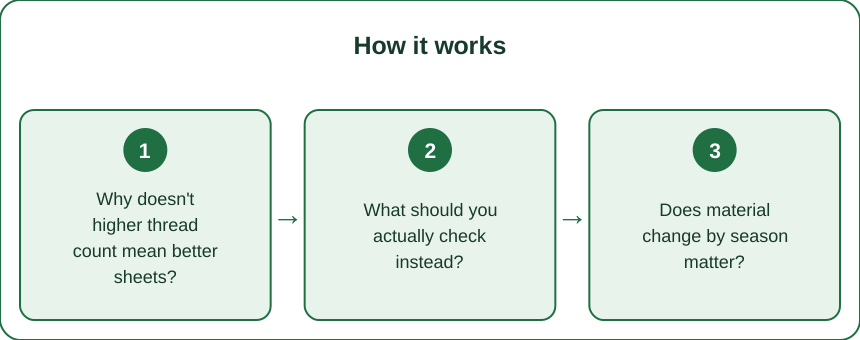
Why doesn’t higher thread count mean better sheets?
Manufacturers can inflate thread count by twisting multiple thin threads together and counting each strand separately — a 1200-thread-count sheet might use the same actual fiber density as a well-made 400-count one, just counted differently. Above 400, added threads mostly add weight and reduce breathability rather than softness.
What should you actually check instead?
Fiber type first: long-staple cotton (like Egyptian or Pima) uses longer fibers that resist pilling and get softer with washing, while short-staple cotton pills and roughens over time regardless of thread count. Weave matters second — percale feels crisp and cool, sateen feels silkier and warmer.

Does material change by season matter?
Yes, meaningfully. Percale cotton or linen breathes better for hot sleepers and summer months, while flannel or a sateen weave traps more warmth for colder seasons. Many people benefit from 2 sheet sets rotated seasonally rather than one all-year set chosen by thread count alone.
What Nobody Tells You About Bedding Shopping
Retail thread-count labels aren’t independently verified in the US the way food labels are — there’s no regulatory body checking the math. The reliable data point is actually fiber origin and staple length, printed in smaller text than the thread count number brands want you to see first.
FAQ: Bedding Quality Questions, Answered
What thread count should I actually look for?
Anywhere between 200 and 400 is the sweet spot for genuine, well-constructed cotton sheets — above that, check fiber type instead of chasing the number higher.
Are expensive sheets always better?
Not automatically — price sometimes reflects brand markup rather than fiber quality, so checking the material label matters more than the price tag.
How do I know if a sheet will pill?
Short-staple fibers pill faster; long-staple cotton (Egyptian, Pima, Supima) and linen resist pilling significantly better over repeated washes.
TL;DR:
- Thread count above ~400 usually reflects marketing math, not real comfort gains
- Long-staple cotton and quality weave matter more than the number on the package
- Percale runs cooler and crisper; sateen runs warmer and silkier
- Consider 2 seasonal sheet sets instead of chasing one high-count set
Next time you’re sheet shopping, flip the package over and read the fiber type before you even look at the thread count.
Keep Reading
This article is for general informational and styling purposes only. Fit, sizing, and product availability may vary.