The Bedding Thread Count Myth That's Costing You Money
Quick Answer: Thread count matters up to a point (roughly 200-400 for cotton), but past that, manufacturers often inflate the number using multi-ply yarns rather than genuinely finer weaving — meaning a 1000-thread-count sheet isn’t necessarily better than a well-made 300-count one. Fiber type and weave matter more than the number alone.
You paid extra for the 1000-thread-count sheets expecting them to feel dramatically better than your old 300-count set. They don’t, and that’s not a fluke — it’s a fairly well-documented industry pattern.
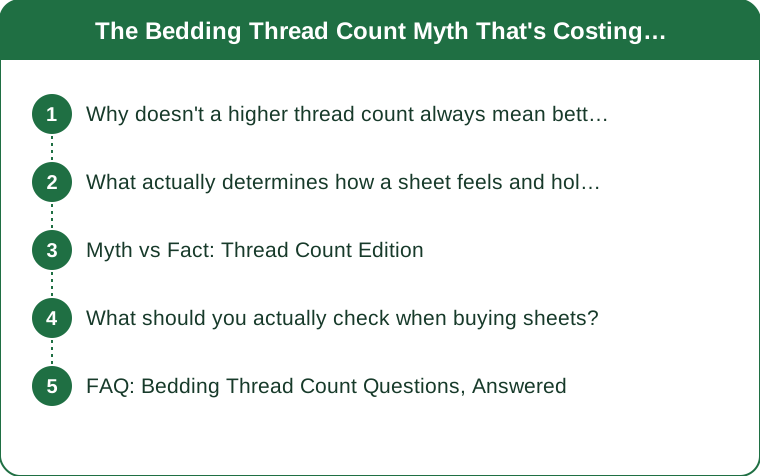
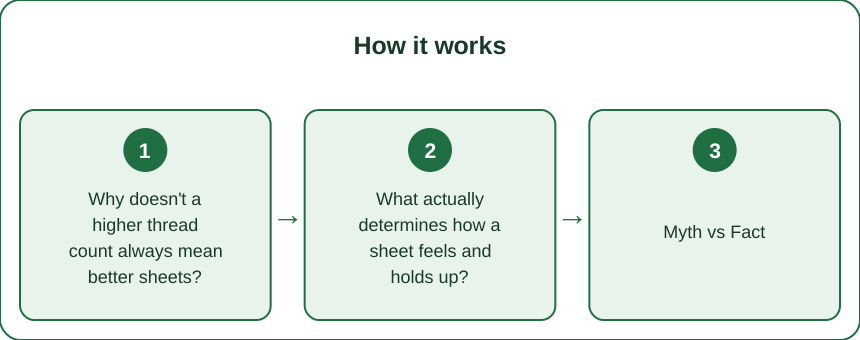
Why doesn’t a higher thread count always mean better sheets?
Past roughly 400 threads per square inch, many manufacturers achieve a higher printed number by using multi-ply yarns (twisting 2-3 thinner threads together and counting each individually) rather than weaving genuinely finer, single-ply thread more densely.
A sheet using this counting method can print a number like 800 or 1000 while using fundamentally the same yarn thickness as a 300-count single-ply sheet — the feel doesn’t scale with the printed number the way the marketing implies.
What actually determines how a sheet feels and holds up?
Fiber type matters more: long-staple cotton (like Egyptian or Pima) produces a smoother, more durable thread regardless of count, while shorter-staple cotton feels rougher even at a higher printed thread count. Weave type also matters — sateen weave feels silkier, percale feels crisper, independent of the number.
A well-made 300-400 count percale sheet from long-staple cotton commonly outperforms a 1000-count multi-ply sheet from lower-quality fiber, both in feel and in how it holds up over repeated washing.

Myth vs Fact: Thread Count Edition
Myth: The highest thread count available is always the best choice. Fact: Quality plateaus around 300-400 for genuine single-ply weaving — beyond that, you’re often paying for a marketing number, not added comfort.
Myth: All thread counts are measured the same way. Fact: Multi-ply counting inflates the number without a proportional quality increase — there’s no regulatory standard forcing consistent measurement across brands.
Myth: Fiber type doesn’t matter as much as the number. Fact: Long-staple cotton at a lower thread count often outperforms short-staple cotton at a higher one, in both feel and longevity.
What should you actually check when buying sheets?
Look for fiber type first (long-staple cotton, like Egyptian or Pima, or a quality linen or Tencel) and weave type (percale for crisp/cool, sateen for soft/silky) before considering thread count at all. If thread count is listed, treat anything in the 200-400 range from a reputable single-ply source as a solid target rather than chasing the highest number available.
Reading reviews that specifically mention pilling and softness after multiple washes tells you more about real-world durability than the thread count number ever will.
FAQ: Bedding Thread Count Questions, Answered
Is percale or sateen better overall?
Neither is universally better — percale runs cooler and crisper, sateen runs softer and slightly warmer; choice depends on personal preference and climate.
Does thread count affect durability?
Fiber quality affects durability more directly than thread count — a lower-count, high-quality long-staple sheet often outlasts a higher-count, lower-fiber-quality one.
Is it worth paying extra for a 600+ thread count sheet?
Only if it’s genuinely single-ply from quality fiber — check the product description for fiber type and ply before assuming a higher number justifies a higher price.
TL;DR:
- Thread count quality plateaus around 300-400 for genuine single-ply weaving
- Past that, many high numbers come from multi-ply yarn counting, not finer weaving
- Fiber type (long-staple cotton) and weave (percale vs sateen) matter more than the number
- Check fiber type and ply before trusting a high thread count to justify a higher price
Check your next sheet purchase for fiber type and ply count before looking at the thread count number at all.
Keep Reading
This article is for general informational and styling purposes only. Fit, sizing, and product availability may vary.