Do Cooling Sheets Actually Work, or Is It Just Marketing? Here's the Science
Quick Answer: Cooling sheets work by wicking moisture and conducting heat away faster than cotton, which helps if you sleep hot from sweat — but they can’t fix a bedroom that’s actually too warm. Fabric alone won’t beat a hot room or a heavy comforter.
You bought the $80 ‘cooling’ sheet set after seeing it everywhere. Some nights it helps. Other nights you’re just as sticky as before. That inconsistency isn’t in your head — it’s because cooling sheets solve one specific problem, and if your overheating comes from somewhere else, no fabric fixes it.

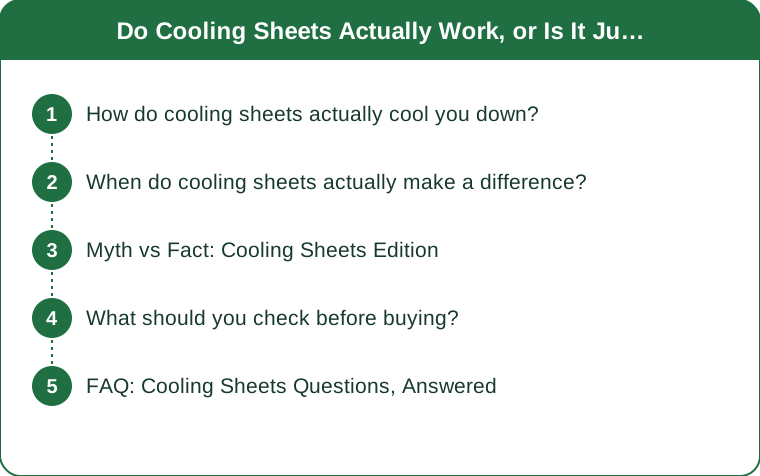
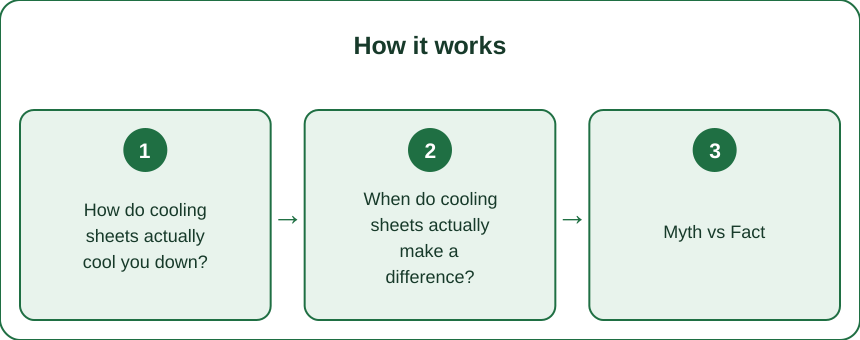
How do cooling sheets actually cool you down?
Most cooling sheets use fibers like TENCEL, bamboo viscose, or specially woven percale that pull moisture off your skin faster than standard cotton and release it into the air. Some blends also use fibers with a naturally lower thermal conductivity, which makes the fabric feel cool to the touch the moment you lie down.
That ‘cool touch’ sensation fades within a few minutes as the fabric warms to your body heat — the real benefit is the ongoing moisture-wicking over the full night, not the initial cold feeling.
When do cooling sheets actually make a difference?
They help most if your overheating is sweat-driven: night sweats from hormones, a warm sleeper who runs hot naturally, or humid climates where regular cotton stays damp against skin.
In a genuinely hot bedroom (above 72-75°F), cooling sheets alone won’t be enough — you’ll need airflow, a fan, or lower the thermostat too. Fabric manages moisture; it doesn’t manufacture cold air.

Myth vs Fact: Cooling Sheets Edition
Myth: Cooling sheets lower your body temperature. Fact: They don’t cool you — they move moisture and heat away faster than trapping fabrics do. The room temperature and your comforter still set the baseline.
Myth: All ‘cooling’ labeled sheets perform the same. Fact: Percale weaves (looser, crisper) breathe better than sateen (tighter, silkier) regardless of fiber. A ‘cooling’ sateen can still trap more heat than a plain cotton percale.
Myth: Higher thread count means cooler sheets. Fact: Past roughly 400 thread count, density often works against airflow. Look for weave type and fiber first, thread count second.
What should you check before buying?
- Weave: percale over sateen for hot sleepers
- Fiber: TENCEL lyocell and bamboo viscose test consistently cooler than standard cotton in wear trials
- Comforter pairing: a cooling sheet under a heavy down comforter still traps heat — match the whole bedding system, not just the sheet
- Room temperature: keep it under 70°F if night sweats are frequent; sheets can’t offset a warm room
FAQ: Cooling Sheets Questions, Answered
Are cooling sheets worth the extra cost?
If you genuinely sweat at night, yes — the moisture-wicking difference is real and measurable. If your discomfort is mostly room temperature, save the money and adjust the thermostat or add a fan first.
Do cooling sheets help with hot flashes?
They help you recover faster after a hot flash by pulling moisture away, but they don’t prevent the flash itself. Pair with breathable sleepwear for the best combined effect.
How long do cooling sheets keep their cooling properties?
Most fiber-based cooling effects hold for the life of the sheet with proper washing (cold water, low heat drying). Fabric softener coats fibers and reduces wicking over time — skip it on cooling sheets specifically.
TL;DR:
- Cooling sheets wick moisture and heat faster than cotton — they don’t lower room temperature
- Best for sweat-driven overheating, not for a bedroom that’s simply too warm
- Percale weave + TENCEL or bamboo fiber outperforms thread count alone
- Skip fabric softener — it blocks the wicking that makes cooling sheets work
If you’re still hot after switching sheets, check the room and comforter before blaming the fabric.
Keep Reading
This article is for general informational and styling purposes only. Fit, sizing, and product availability may vary.