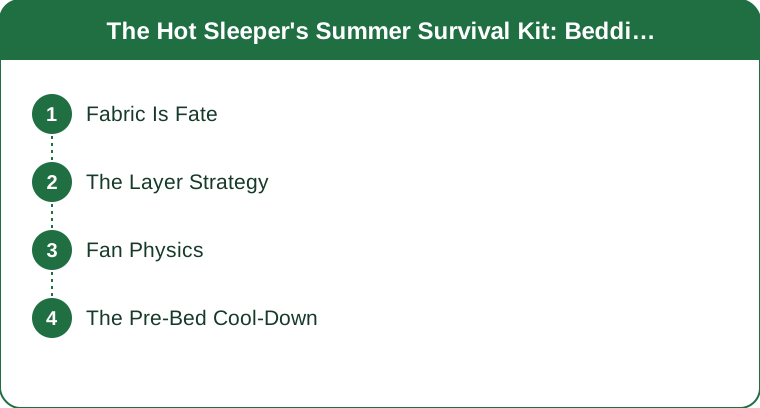
The Hot Sleeper's Summer Survival Kit: Bedding Edition
Quick Answer: The fastest fix for hot sleepers is swapping tightly-woven synthetic sheets for a breathable percale cotton or linen weave, trading one heavy duvet for stackable layers you can shed individually, and pointing a fan directly at your body instead of the room.
3:12 a.m. You flip the pillow to the cool side for the third time tonight. The duvet has stopped being a blanket and started being your opponent.
Nobody warns you that beating summer heat in bed is a physics problem, not a willpower one — and physics is a lot easier to win than willpower is.
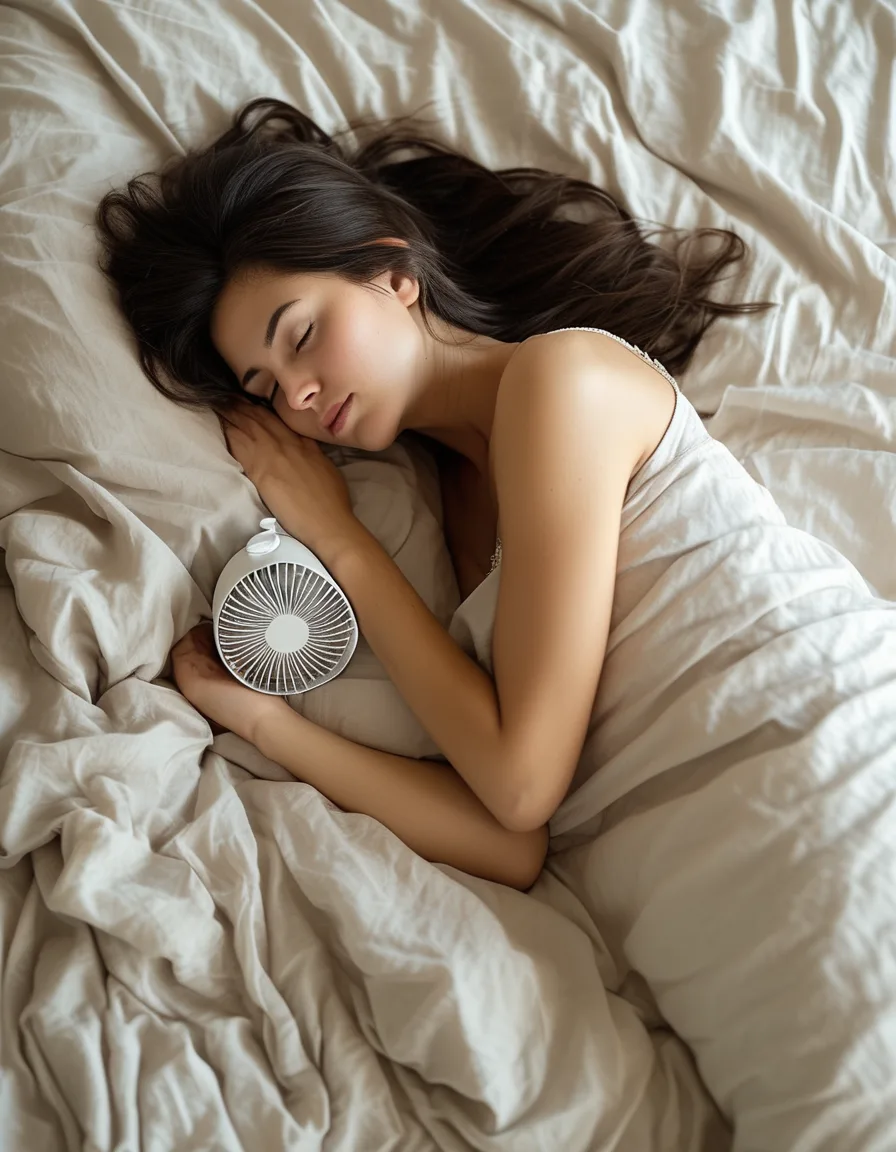
Why do some sheets feel hot no matter the thread count?
Thread count measures density, not breathability, and weave matters more than the number on the package. Percale cotton and linen are woven loosely enough that air moves through them, which is exactly why hotel sheets feel crisp instead of clingy.
Microfiber and jersey, by contrast, are tightly knit synthetic or semi-synthetic fabrics that trap body heat and moisture close to your skin. That “cozy” feeling you get from a soft jersey sheet in January is the same trapping effect working against you in July.
A few fabric notes worth keeping in mind when you shop:
- Percale cotton: crisp, matte finish, breathes well, gets softer with washing.
- Linen: even more breathable than cotton, wicks moisture, wrinkles on purpose.
- Sateen: silkier feel but a tighter weave, so it traps more heat than percale.
- Microfiber/jersey: soft and cheap, but the worst pick for a hot sleeper’s bed.
If you only make one change this summer, make it this one. A high thread count in the wrong weave is still the wrong sheet.
What’s the smartest way to layer a summer bed?
A single heavy duvet is an all-or-nothing negotiation at 3 a.m. — too hot, but taking it off means no coverage at all. Layering lets you eject exactly as much warmth as you need, one piece at a time, without waking all the way up to do it.
Build the bed like this instead:
- A breathable flat sheet as your base layer, always.
- A light cotton blanket for the first line of warmth.
- A thin quilt or coverlet on top, reserved for when the AC kicks in hard overnight.
On the hottest nights, that might mean sleeping under just the flat sheet. On a cooler one, you stack all three. The point is choice — you’re never stuck negotiating with a duvet that’s either fully on or fully off.
Where should you actually point a fan at night?
Fans cool skin through evaporation and airflow — they don’t actually lower the temperature of a room. Point the fan at yourself, not at the ceiling or a far corner, because a fan blowing into empty air is just moving hot air around for no benefit.
For a real upgrade, set up a cross-breeze: crack a window and position the fan to exhaust air out of it, rather than just recirculating the room’s air in place. This actively flushes the day’s trapped heat out of the bedroom before you even lie down, instead of just stirring it.
A few fan placement habits that make a real difference:
- Aim it across the bed at body height, not down from a dresser or shelf.
- Use the exhaust setup an hour before bed to pre-cool the room.
- Combine it with breathable sheets — a fan blowing on microfiber still traps heat underneath.

Does a shower before bed actually help you sleep cooler?
Yes — but the temperature of the water matters. A lukewarm (not ice-cold) shower before bed helps your body shed heat right when you need it to drop for sleep, because your skin cools quickly once you step out, pulling your core temperature down with it.
A very cold shower can actually work against you here, since it can make your body work to warm back up afterward. Lukewarm water gets the cooling effect without triggering that rebound. It’s essentially free, it’s backed by basic sleep-temperature science, and you needed a shower before bed anyway — this is one of those rare wins where the easy option is also the correct one.
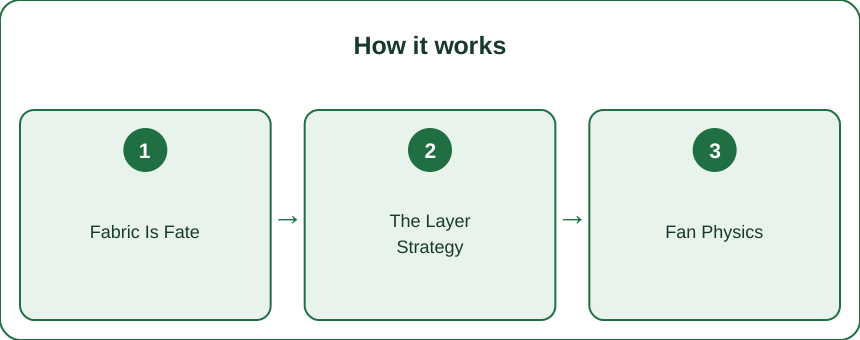
Myth vs Fact: Hot Sleeper Edition
Myth: A higher thread count always means a cooler sheet. Fact: Weave matters far more than the number. A 1,000-thread-count sateen can sleep hotter than a 300-thread-count percale, because the weave — not the density — determines airflow.
Myth: Cranking the AC is the only real fix. Fact: AC helps, but the wrong sheets will trap heat against your skin regardless of room temperature. Fabric and layering do a surprising amount of the work on their own.
Myth: A fan just moves hot air around and doesn’t really help. Fact: A fan aimed at your body cools you through evaporation and airflow over skin, which is a real physiological effect — it’s only useless when it’s aimed at empty air instead of you.
Myth: You should sleep with as little bedding as possible if you run hot. Fact: Some hot sleepers actually sleep better with a very thin, breathable layer than with none at all, since bare skin against a bare mattress can feel clammy. The goal is breathable coverage, not zero coverage.
FAQ: Cooling Down a Hot Sleeper’s Bed
What’s the single best fabric for hot sleepers?
Percale cotton or linen are the top choices because their loose weave lets air move freely against your skin. Both outperform tighter weaves like sateen or synthetic blends like microfiber, regardless of thread count.
Should I turn off the AC and just rely on a fan?
Not necessarily — the two work best together. The fan handles airflow directly on your body while the AC lowers the ambient room temperature, and combining them is more effective than either alone.
How many bedding layers should a hot sleeper actually use?
Most hot sleepers do best with a breathable flat sheet as the base plus one light layer they can add or remove, rather than a single heavy duvet. The exact number matters less than being able to shed a layer without fully waking up.
TL;DR:
- Weave beats thread count — percale cotton and linen breathe, microfiber and jersey trap heat.
- Layer your bed so you can shed warmth in stages instead of an all-or-nothing duvet.
- Point fans directly at your body and set up a window cross-breeze to flush out trapped heat.
- A lukewarm (not cold) pre-bed shower helps your core temperature drop for sleep.
- Small, cheap changes — fabric, layering, fan angle — beat buying new AC.
Keep Reading
This article is for general informational and styling purposes only. Fit, sizing, and product availability may vary.