The Sheet Schedule: How Often to Wash Everything on Your Bed (Honestly)
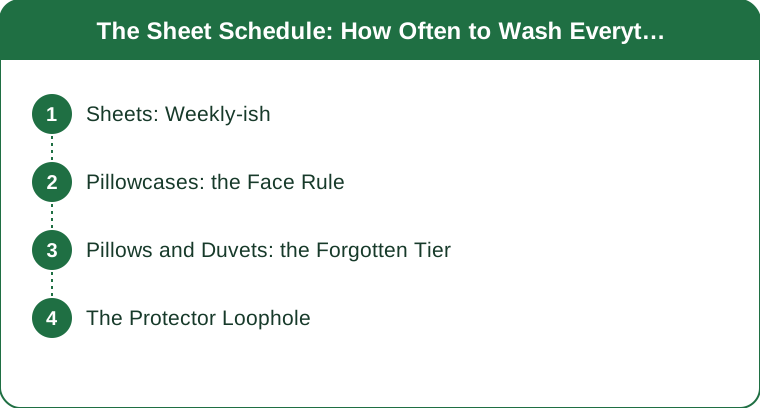
Quick Answer: Sheets should be washed weekly, pillowcases twice a week if your skin is breakout-prone, pillows aired or dried quarterly and deep-washed roughly twice a year, duvets cleaned seasonally, and mattress protectors washed monthly — the honest answer to “how often should I wash my sheets” is more often than most of us actually do it.
Somewhere between never and daily lies the correct answer to how often you should wash your sheets, and if you’re honest with yourself, you’re probably camped a lot closer to never than you’d admit under oath.
No judgment here — most of us are. But there’s a real, unglamorous calendar behind this question, and once you see it, it’s hard to keep ignoring.

How often should you actually wash your sheets?
Here’s the number worth sitting with: you spend somewhere north of 50 hours a week in contact with your sheets, and biologically speaking, that’s a lot of skin cells, oil, and sweat being deposited into the fabric over and over. Sleeping is, in a very literal sense, a slow-motion exfoliation session your sheets are absorbing every night.
Weekly washing keeps that ecosystem from getting out of hand. The easiest way to actually hit “weekly” instead of “whenever I remember” is owning two full sheet sets per bed — one on the mattress, one in the wash — so there’s never a reason to put it off.
Why do pillowcases need to be washed more often than sheets?
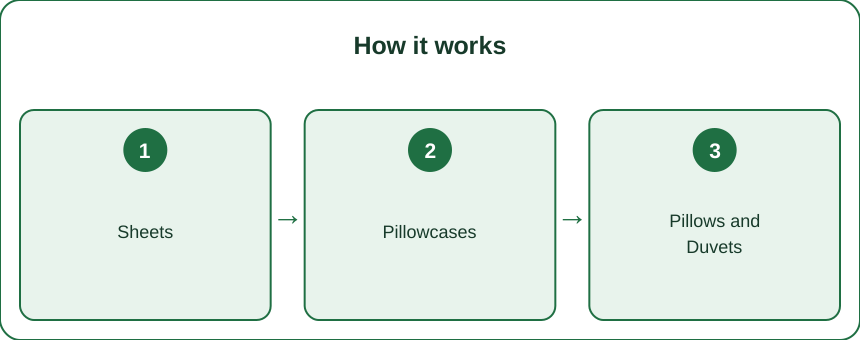
This is the detail most wash schedules get wrong: your pillowcase isn’t just bedding, it’s functionally skincare equipment. It sits directly against your face for roughly eight hours a night, which means it’s absorbing facial oil, skincare product residue, and everything your skin sheds — all in a much smaller, more concentrated area than the rest of the sheet set.
For that reason, pillowcases deserve their own faster rule: twice weekly for breakout-prone skin, rather than riding along on the same schedule as the sheets underneath them. It’s a small adjustment that earns its keep faster than almost anything else on this list. If breakouts are persistent or painful despite a solid pillowcase routine, that’s a reasonable moment to loop in a dermatologist rather than assuming laundry alone will solve it.

What about pillows and duvets — do they need washing too?
This is the forgotten tier, and it’s where most bedding routines quietly fall apart. Pillows and duvets don’t touch skin as directly as sheets and pillowcases, so it’s easy to assume they don’t need attention — but they still accumulate moisture, dust, and residue over time.
- Pillows: toss them in the dryer on low heat quarterly, ideally with a couple of tennis balls to help fluff them back up, and give them a full wash roughly twice a year if the pillow is labeled washable.
- Know when to replace, not just wash. If a pillow fails the fold test — fold it in half and it doesn’t spring back — that’s your sign it’s done, no amount of washing fixes that.
- Duvets: a seasonal deep clean, with monthly airing out in between, keeps them fresher without needing constant full washes.
It sounds like a lot written out, but in practice it’s a handful of dates on a calendar rather than a weekly chore.
What Nobody Tells You About Mattress Protectors
Here’s the piece almost nobody mentions: your mattress itself can’t really be laundered, which makes your mattress protector the one line of defense actually standing between your mattress and everything your body does overnight.
- Washed monthly, it quietly protects the one thing in the whole setup you truly cannot clean directly.
- It’s the unglamorous MVP of the bedding rotation — nobody photographs their mattress protector for a cozy bedroom post, but it’s doing more structural work than almost anything else on the bed.
- Skipping it isn’t really an option to consider, since a mattress you can’t wash is a mattress that needs this layer doing the job on its behalf.
Call it the goalkeeper of bed hygiene: essential, unglamorous, and the thing everyone forgets about until something goes wrong.
FAQ: Washing Bedding
Is washing sheets once a week actually necessary, or is that overkill?
Given how many hours you spend in direct contact with your sheets each week, weekly washing is a reasonable baseline rather than overkill — it’s really about keeping oil, sweat, and skin cell buildup from accumulating faster than it’s removed.
Why do pillowcases need a different schedule than the rest of the sheets?
Pillowcases sit directly against your face for hours every night in a smaller, more concentrated area than the rest of the bed, which is why breakout-prone skin benefits from washing them twice a week instead of once.
How do I know when a pillow needs replacing instead of just washing?
Try the fold test — fold the pillow in half and see if it springs back to shape on its own; if it stays flat and doesn’t recover, that’s a sign it’s past the point where washing or fluffing will help.
TL;DR:
- Sheets: wash weekly, and keep two sets in rotation so it’s never a hassle.
- Pillowcases: twice a week for breakout-prone skin, since they sit directly against your face for hours nightly.
- Pillows: dryer on low heat quarterly (with tennis balls), full wash about twice a year if washable, replace when the fold test fails.
- Duvets: seasonal deep clean with monthly airing in between.
- Mattress protectors: wash monthly — it’s the one layer protecting the mattress you can’t actually launder.
Keep Reading
This article is for general informational and styling purposes only. Fit, sizing, and product availability may vary.