Your Pillowcase Fabric Might Be Undoing Your Skincare and Hair Routine
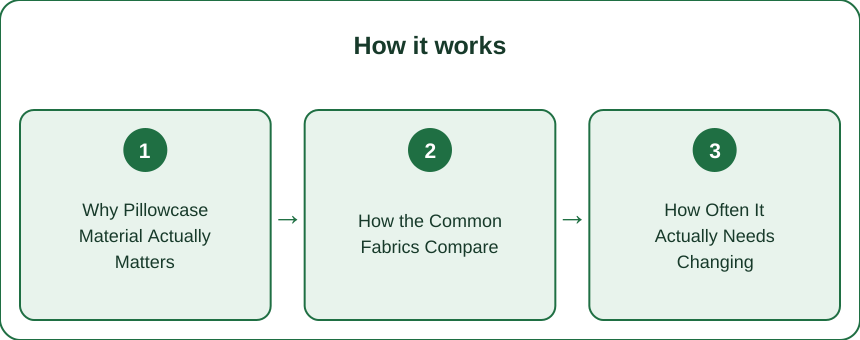
A careful nighttime skincare routine and a full night of hair-friendly practices can both get quietly undone by the one thing touching your face and hair for seven or eight hours straight — the pillowcase. Fabric choice and change frequency matter more than most routines account for. Here is why the material makes a real difference, how the common fabrics compare, and how often it actually needs changing.


Why Pillowcase Material Actually Matters
The mechanism: the the-friction-differs-by-fabric (the coarser, more textured fabrics creating more friction against skin and hair strands overnight than smooth fabrics — the texture-determines-friction-not-just-comfort), the the-absorption-pulls-moisture-and-product (the highly absorbent fabrics like standard cotton pulling moisture and applied skincare product off the skin overnight — the absorbent-fabric-competes-with-your-serum), the the-hair-friction-causes-breakage-and-frizz (the repeated overnight friction against hair strands contributing to tangling, frizz and breakage over time — the seven-hours-of-friction-adds-up), the the-oil-and-bacteria-buildup (the fabric accumulating skin oils, product residue and bacteria between washes regardless of type, though some fabrics resist it better — the buildup-happens-to-every-fabric-differently), the the-sleep-position-changes-the-impact (the side and stomach sleepers experiencing more direct face-to-fabric contact and friction than back sleepers — the your-sleep-position-changes-how-much-this-matters-for-you), and the reframe (the pillowcase as an active participant in your skin and hair routine every single night, not a neutral background object — the fabric either supports or quietly works against everything else you’re doing)).

How the Common Fabrics Compare
The real differences: the silk-and-satin-lowest-friction (the smooth, low-friction surface of silk or satin reducing both skin creasing and hair tangling most effectively — the the-lowest-friction-option), the the-standard-cotton-most-absorbent (the cotton’s high absorbency pulling more moisture and product from skin than smoother alternatives, while being the most breathable and affordable — the cotton-trades-absorption-for-affordability), the the-percale-cotton-middle-ground (the tightly woven percale cotton offering a smoother surface than standard cotton weaves while remaining breathable and washable — the a-reasonable-middle-option), the the-bamboo-and-microfiber-alternatives (the bamboo-derived fabrics offering some of silk’s smoothness at a lower price point, with decent moisture-wicking — the a-budget-friendly-smoother-option), the the-flannel-and-textured-fabrics-highest-friction (the flannel and heavily textured fabrics, while cozy, creating the most friction against skin and hair — the coziest-often-means-highest-friction), and the frame (the fabric hierarchy from lowest to highest friction running roughly silk and satin, then percale and bamboo blends, then standard cotton, then flannel and heavily textured fabrics — the tradeoff is friction and absorption versus cost and coziness).
How Often It Actually Needs Changing
The realistic schedule: the the-every-two-to-three-days-ideal (the dermatology-referenced guidance generally suggesting a pillowcase change every two to three days for oil and bacteria control — the more-frequent-than-most-people-assume), the the-skin-concerns-shorten-the-window (the acne-prone or highly reactive skin benefiting from changing closer to every one to two days — the reactive-skin-needs-a-tighter-schedule), the the-having-a-rotation-makes-it-realistic (the owning two or three pillowcases specifically to make frequent changing logistically easy — the rotation-removes-the-laundry-excuse), the the-flip-the-pillowcase-between-full-changes (the flipping to the clean side of a pillowcase as a stopgap between full washes, though not a substitute for regular washing — the flipping-buys-a-little-time-not-a-real-fix), the the-wash-temperature-matters-for-buildup (the washing in appropriately warm water actually removing oil buildup rather than just refreshing scent — the temperature-affects-how-clean-it-actually-gets), and the frame (the realistic schedule as changing every two to three days, tighter for reactive skin, supported by owning a small rotation of pillowcases and washing at an effective temperature — the fabric choice matters, but so does how often it’s actually clean).
Pillowcases are an active participant in overnight skin and hair health, not a neutral surface — coarser, absorbent fabrics create more friction against hair and pull more moisture and applied skincare product off the skin than smoother fabrics do, and the effect compounds every single night. Silk and satin offer the lowest friction, tightly woven percale cotton and bamboo blends land in a reasonable middle ground, and standard cotton and flannel create the most friction and absorption despite being the coziest and most affordable options. Regardless of fabric, dermatology-referenced guidance generally suggests changing pillowcases every two to three days, tighter for acne-prone or reactive skin, which is far more realistic with two or three pillowcases in rotation than relying on a single one and remembering to do laundry on time.
Keep Reading
This article is for general informational and styling purposes only. Fit, sizing, and product availability may vary.