The Bedding Edit: Building the Bed Your Sleep Deserves
You will spend roughly a third of your life in direct physical contact with your bedding — more skin-hours than any garment you own — and yet most beds are assembled from hand-me-downs, impulse sales and a pillow of unknown age and allegiance. Reframe the category: bedding is sleep equipment, as consequential as any wellness purchase in the house, and upgrading it follows learnable rules rather than thread-count marketing. Here is the complete edit: materials decoded, the pillow matched to your sleep position, and the upgrade order that spends money where sleep actually improves.

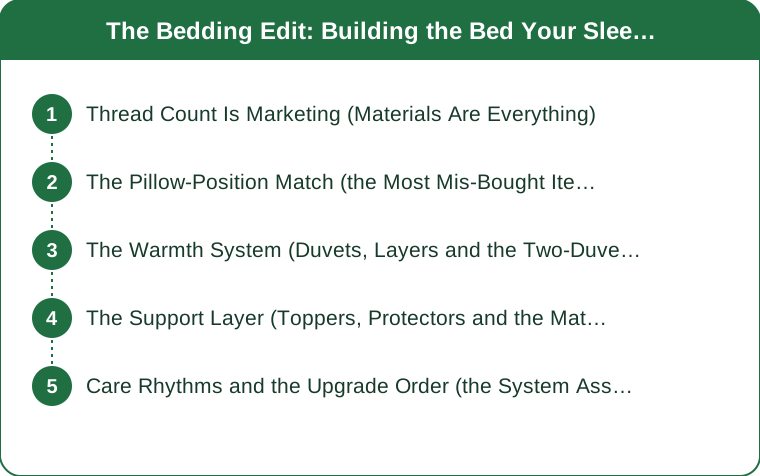
Thread Count Is Marketing (Materials Are Everything)
The great sheet deception, corrected: thread count above ~400 is mostly numbers theater (manufacturers count multi-ply threads creatively — an 800-count of mediocre cotton sleeps worse than a 300-count of good cotton), while the variables that actually determine feel and sleep temperature are fiber and weave: long-staple cotton (the quality marker worth seeking — smoother, stronger fibers), percale weave (crisp, cool, matte — the hotel-sheet feel and the hot sleeper’s friend), sateen weave (silky, warmer, drapey — the smooth-and-cozy preference), linen (the temperature-regulation champion — breathable in summer, softening for years, wrinkled as a lifestyle statement), and bamboo-derived lyocell (silky-cool with genuine moisture-wicking — the sweaty-sleeper category’s rising star). The buying rule: choose weave by your thermostat (hot sleepers percale or linen, cold sleepers sateen or flannel), fiber by budget-quality (long-staple cotton or linen), and ignore any number over 400 as decoration. Sheets touch you all night. Buy the fabric, not the math.
The Pillow-Position Match (the Most Mis-Bought Item in the House)
The alignment principle: your pillow’s job is keeping your neck neutral — spine level, ear over shoulder — which makes pillow choice a function of sleep position, not preference marketing: side sleepers (most women) need firm, high-loft pillows filling the shoulder-to-ear gap (the too-flat pillow is the side-sleeper’s morning neck-ache in object form; a pillow between the knees completes the alignment, and knee-pillow converts evangelize for reasons), back sleepers need medium loft cradling the head without craning it forward, stomach sleepers need thin-to-none (and gentle encouragement toward side sleeping, which their necks would prefer), and combination sleepers do best with adjustable-fill or medium-responsive pillows that survive position changes. The replacement truth nobody follows: pillows expire — 1–2 years for standard fills, longer for quality latex and adjustable models (the fold test: a folded pillow that stays folded is a retired pillow). The $60–120 correct-loft pillow is, per hour of use, among the cheapest meaningful health purchases available. The decade-old mystery pillow is not sentimental. It is sabotage.

The Warmth System (Duvets, Layers and the Two-Duvet Diplomacy)
The top-of-bed strategy: duvet fill decoded (down — warmest per weight, premium-priced, check responsible-sourcing standards; down-alternative — the allergy-friendly, washable, budget answer that has genuinely closed the comfort gap; wool — the temperature-regulating dark horse for sweaty sleepers), fill weight matched to season and thermostat (the all-season duvet myth serves retailers — a lighter summer and warmer winter option, or a layered system, serves sleepers), the layering architecture (sheet, light blanket, duvet — adjustable-by-layer beats one heavy commitment, and the end-of-bed throw is functional equipment disguised as decor), and the marriage-saving intervention deserving of its fame: the two-duvet system (Scandinavian standard — each sleeper gets their own duvet, sized and weighted to their thermostat; blanket-theft ends, temperature wars end, and the bed makes up almost as neatly). Temperature remains sleep’s master variable — the bedding system is climate control you wear, and it should be built for the warmer sleeper’s summer and the colder sleeper’s winter simultaneously. That is not luxury. That is engineering.
The Support Layer (Toppers, Protectors and the Mattress Question)
The foundation tier: the mattress topper as the budget renovation (a $100–300 topper meaningfully re-tunes a too-firm or aging mattress — latex for responsive-cool, memory foam for pressure-relief-warm, down-alternative for pillowy-soft; the topper buys years and comfort at a tenth of mattress cost, with the honest limit that no topper rescues a structurally failed mattress — the body-shaped crater is a replacement conversation), the mattress protector as non-negotiable infrastructure (waterproof-breathable models retired the crinkly plastic reputation years ago — the protector is why your mattress warranty survives and your mattress hygiene bears thinking about; wash it monthly-ish), and the mattress-age honesty check (7–10 years for most — sagging, waking sore, or sleeping better in hotels are the tells; when replacement is due, the topper knowledge transfers: firmness by position and preference, trial periods used seriously). The spending hierarchy in this layer: protector always, topper as the high-value tune-up, mattress when the tells accumulate — in that order, for almost every budget.
Care Rhythms and the Upgrade Order (the System Assembled)
The maintenance schedule that keeps the investment performing: sheets washed weekly-ish in warm-not-hot (the skin-contact frequency justifies it — and two sheet sets per bed makes the rhythm frictionless: one on, one in the wash), pillows into the dryer on low with tennis balls quarterly (re-lofting and freshening — and washable pillows actually washed twice yearly), duvets aired regularly and cleaned seasonally, protectors monthly, and the sun-and-air treatment (the stripped bed airing out on sheet-change morning — moisture management the duvet appreciates). And the final synthesis — the upgrade order for spending real money where sleep improves most: correct pillow first (alignment beats everything), sheets matched to your thermostat second (the all-night skin interface), the topper third (support tune-up), the two-duvet system fourth (temperature diplomacy), and decor pillows last-or-never (the six decorative cushions relocated nightly to a chair are furniture, not sleep equipment — beloved, but be honest). Total system, assembled over a year of paydays: a bed that competes with hotels. Cost-per-night arithmetic: pennies, for the third of your life spent there.
Bedding, promoted to equipment: fabric over thread count, the pillow matched to your sleep position and retired on schedule, a layered warmth system (two duvets if sharing — the diplomacy is real), a protector-topper-mattress hierarchy, and weekly wash rhythms that keep it all performing. Upgrade in sleep-impact order — pillow, sheets, topper — and let the decorative cushions know their place. A third of your life happens in this equipment. Build it like that is true, because it is.
Keep Reading
This article is for general informational and styling purposes only. Fit, sizing, and product availability may vary.